
In Indian culture, where spirituality permeates daily life, certain symbols and objects like kalash are not just ritualistic tools—they are sacred vessels of meaning, tradition, and beauty. One such revered object is the Kalash, a ceremonial pot that holds profound significance in Hindu rituals, especially during weddings, festivals, housewarming ceremonies, and poojas.
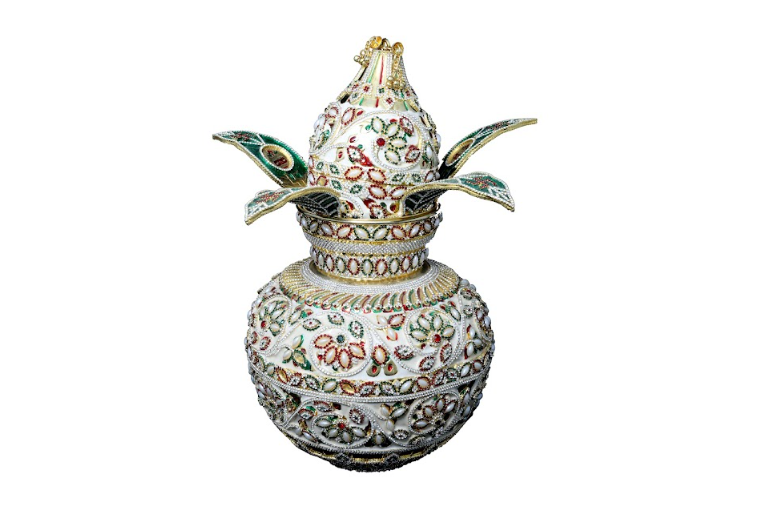
The Kalash in the image above is a remarkable example of this spiritual heritage—an exquisitely adorned piece, studded with colored stones and delicate craftsmanship, transforming a sacred item into a work of art. Beyond its visual appeal, this Kalash is a powerful representation of purity, prosperity, and divine presence.
Understanding the Significance of the Kalash
The Kalash, traditionally made from metal—such as copper, silver, or brass—is a water-filled pot topped with mango leaves and a coconut. It is often invoked at the beginning of a religious ritual or celebration and placed in a sanctified corner, marking the presence of the divine.
In Vedic tradition, the Kalash symbolizes the source of life. The pot itself represents Mother Earth, the water within signifies the elixir of life, the coconut atop denotes fertility and prosperity, and the five mango leaves represent the five elements—earth, water, fire, air, and space. When sanctified during rituals, the Kalash becomes an abode of divine energy, often invoking deities like Lakshmi, Durga, or Ganga.
The Marriage Kalash: A Sacred Union of Symbolism and Art
The Kalash depicted in the image is no ordinary ritual vessel. Known commonly as a “Marriage Kalash” or “Shubh Kalash,” it is especially designed for weddings and major auspicious occasions. The intricate work in this particular piece—embellished with colorful stones, floral motifs, and elegant curves—shows how religious symbols can also serve as heirloom artifacts, merging the sacred with the spectacular.
Such a Kalash plays a central role in traditional Hindu wedding ceremonies. Placed at the mandap or entrance, it is believed to invite blessings from the divine for a prosperous, harmonious union. Its placement is also said to ward off negative energies and purify the surrounding space.
Ritual Use Across Ceremonies
The Kalash is indispensable across a wide spectrum of Hindu rituals. Here’s how it’s used in different settings:
- Weddings: In many cultures, the Kalash is placed on either side of the mandap or near the havan kund. It may also be used during grah pravesh of the bride into her new home.
- Poojas and Festivals: Whether it’s Ganesh Chaturthi, Navratri, or Lakshmi Puja, the Kalash is filled with water, betel nuts, coins, and grains, then topped with mango leaves and coconut to symbolize abundance.
- Housewarming (Griha Pravesh): A Kalash is carried inside the new home to purify it and to seek divine protection and grace.
- Daily Worship: Smaller versions of decorated Kalash pots are placed in home temples to maintain a constant spiritual atmosphere.
Craftsmanship that Celebrates Devotion
The beauty of the Kalash shown above lies in its meticulous craftsmanship. It is embellished with meena work and semi-precious stones, creating an ornate finish that reflects the grandeur of Indian decorative arts. Each curve and motif is likely hand-crafted, with attention to detail that speaks to the artisan’s reverence for the spiritual purpose of the object.
This fusion of art and devotion not only elevates the aesthetic of the pooja setup but also transforms the sacred vessel into a symbol of cultural richness and refinement. Such decorative Kalash pots are often preserved and passed down as family heirlooms, carrying forward the legacy of rituals and blessings across generations.
Cultural Variations and Symbolic Meanings
The form and use of the Kalash may differ slightly across regions in India, but the core meaning remains unchanged—welcoming divine energy and signifying abundance. In South India, for example, the Kalash (called Kumbham) is often used in temple rituals and during Kumbhabhishekam. In North India, the Kalash marks the beginning of any auspicious ceremony and is often decorated with swastik symbols or red sacred threads (kalawa).
In Vastu Shastra, the Kalash is also believed to attract and store positive cosmic energy. Keeping a Kalash at home, especially one decorated and placed correctly, is thought to bring harmony and financial stability.
Ideal for Gifting and Spiritual Gifting
A beautifully decorated Kalash like the one pictured is not just a spiritual item—it’s a meaningful gift. In Indian society, where gifting spiritual objects is common during weddings, anniversaries, or housewarming parties, an artistic Kalash makes a thoughtful and auspicious present. It carries a message of well-being, wealth, and divine blessings, making it suitable for both personal and ceremonial gifting.
It is also becoming a popular choice in spiritual gifting hampers, often combined with diya sets, incense holders, and miniature idols.
Preservation and Care Tips
Since such Kalash pieces are often made of silver, brass, or similar metals and adorned with enamel and stones, they require proper care:
- Cleaning: Avoid harsh chemicals. Use a mild soap and soft cloth to clean the surface without damaging the embellishments.
- Storage: Keep the Kalash in a dry space, preferably in a velvet-lined box to prevent tarnishing and damage to the decorations.
- Display: When not in use for rituals, the Kalash can be displayed in a home mandir or on a spiritual shelf, where it continues to enhance the ambiance with its presence.
Blending Tradition with Contemporary Spirituality
In today’s age, where modern life often moves at a frenetic pace, reconnecting with tradition can offer a sense of grounding and inner peace. Objects like the Kalash serve as tangible reminders of one’s roots, culture, and spiritual identity. A highly decorative Kalash not only fulfills religious functions but also adds artistic elegance to home decor.
With increasing interest in traditional spiritual practices, many families are investing in high-quality, artistically crafted pooja essentials that reflect both devotion and style. This resurgence in the appreciation of handcrafted pooja items ensures that such art forms—and the cultural stories behind them—continue to thrive.
Final Reflections
The Kalash is more than a pooja essential—it is a symbol of life, prosperity, and sacred beginnings. Whether used in a wedding ceremony, a festival ritual, or as a decor piece in a spiritual setting, a beautifully adorned Kalash like the one above enhances both the ritual experience and the aesthetic atmosphere.
With its rich history, deep symbolism, and timeless beauty, the Kalash remains a cherished artifact in Indian homes—a vessel that carries not just water, but centuries of culture, prayer, and blessings.